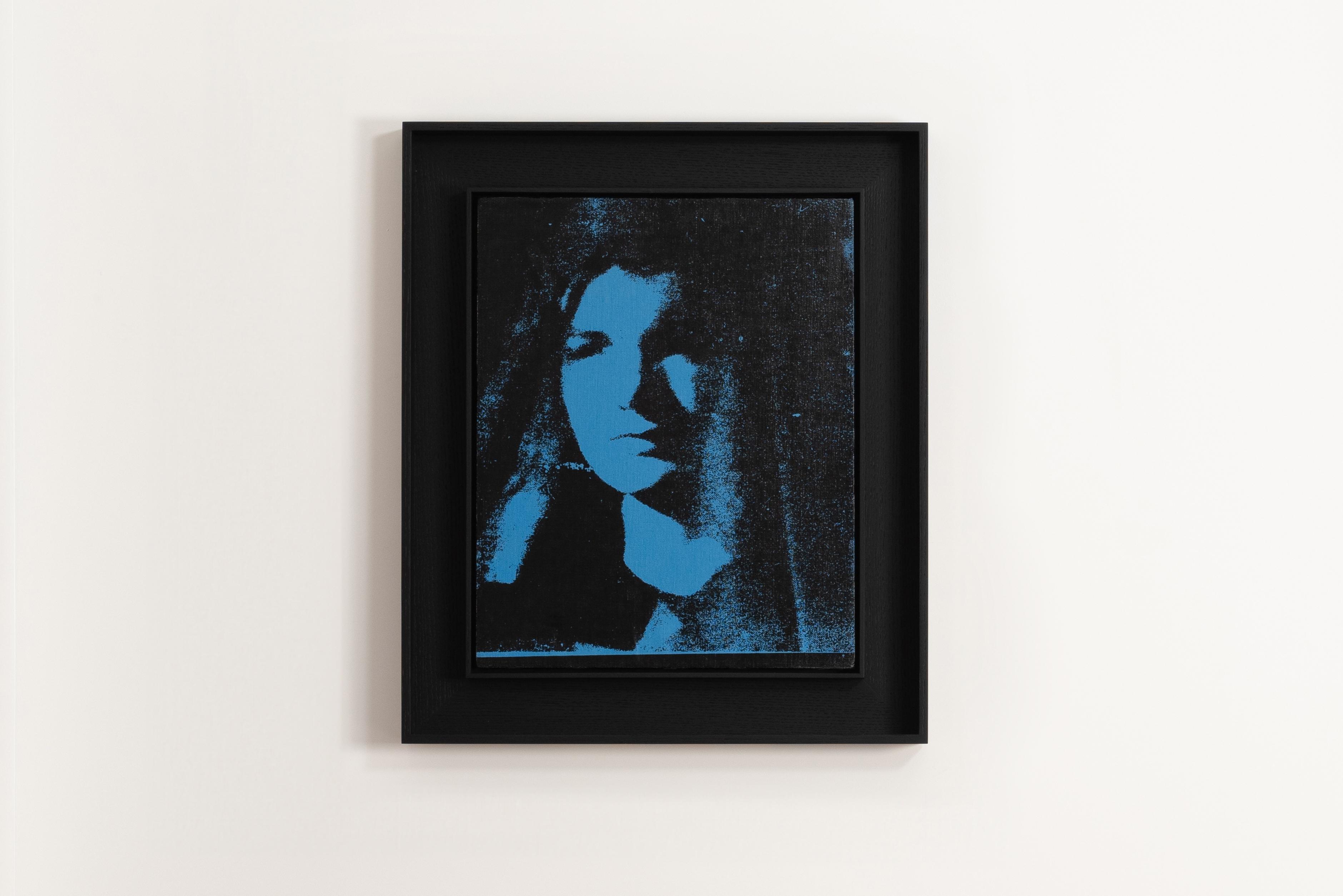
Peder Lund Art Advisory is pleased to have facilitated the acquisition of Andy Warhol’s Jackie (1964) for a significant private collection. The Jackie paintings occupy a singular position within Warhol’s body of work. They connect his two dominant preoccupations, the image of celebrity as commodity and the image of disaster as spectacle, in a single series. That this work now belongs to an important collection is an outcome of which we are very proud.
The Jackie paintings are closely related to Warhol’s Death and Disaster paintings, which he had been making since 1962. These works were based on wire-service photographs and tabloid front pages, images of catastrophe that had been widely reproduced. In Warhol’s work, repetition served to confront disturbing images until their impact dulled, and to examine what that process meant.
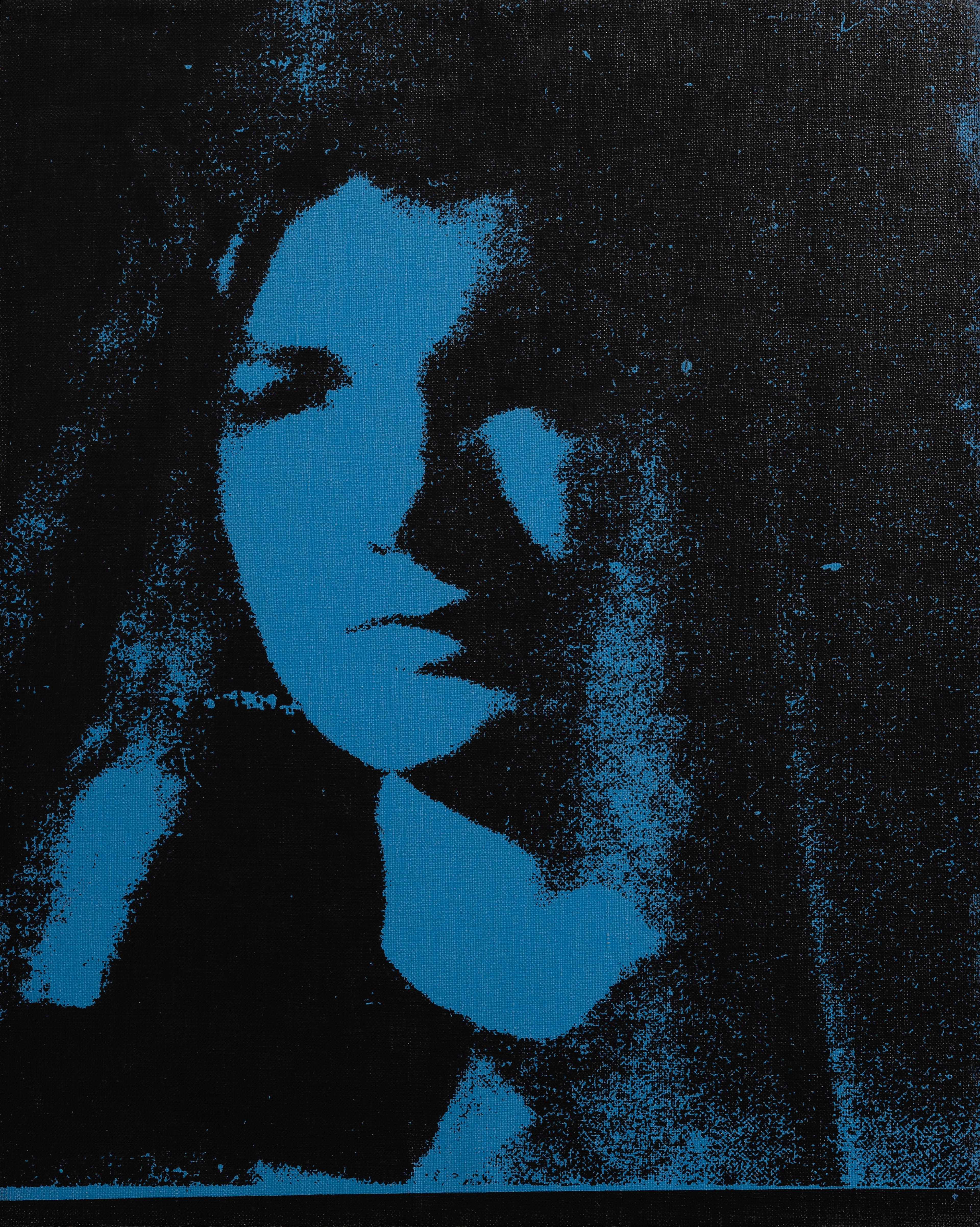
Of the eight source photographs Warhol used across the Jackie series, the Veil image is the only one that shows Jackie in mourning; the others show her in shock or in official composure. It was taken by Henri Dauman at Kennedy’s graveside, two days after the assassination, and published in Life magazine. The composition is cropped close on her face, which is veiled and turned downward. As David Bourdon observed, “by cropping in on Mrs. Kennedy’s face, Warhol emphasized the heavy emotional toll during those tragic closing days in November.” Georg Frei and Neil Printz have similarly noted that the Jackie works made her the “dramatic focus and emotional barometer of the Kennedy assassination.”
The blue-and-black palette is the most austere of the Jackie colorways. The cerulean blue appears cold against the dominant black ground, and the canvas weave shows through the ink, giving the impression of imperfect reproduction. As Rainer Crone noted of Warhol’s palette choices across the series, they “serve to intensify the effect of alienation created by the realism of the visual content.” Alastair Sooke has also observed: “As well as being an elegiac colour, appropriate for mourning, blue is the colour of the Holy Virgin – and Jackie was like a contemporary, secular version of a saint, venerated by the masses.”
Kennedy was assassinated on November 22, 1963. Accounts of Warhol’s reaction differ: John Giorno remembered the two of them weeping in front of the television, while studio assistant Gerard Malanga recalled that Warhol’s first response was, “Let’s go to work.” In the weeks that followed, as photographs of the event filled newspapers and magazines across the country, Warhol collected press images of the assassination and of Jacqueline Kennedy. By February 1964, he had chosen eight source photographs. The Frei & Printz catalogue raisonné, which groups the Jackie works by source image, documents 303 entries. The Veil subgroup, to which the present work belongs, contains 28 works, making it one of the largest in the Jackie section.
The Jackie series is often seen as completing a group of works Warhol made in the early 1960s on female celebrity, alongside his portraits of Marilyn Monroe and Elizabeth Taylor. Each was prompted by a crisis: Monroe’s death in 1962, Taylor’s serious illness during the filming of Cleopatra, and the Kennedy assassination. The Jackie images differ, however, in their sources. Where Marilyn and Liz were based on Hollywood publicity stills showing their subjects at the height of their fame, Jackie draws on documentary press photographs taken at a moment of national tragedy. Art historian Cécile Whiting has argued that the series was concerned with the public performance of grief, observing that “the funeral of the President was the premier instance of the public presentation of private emotion in Warhol’s lifetime.”
Andy Warhol (1928–1987) is widely regarded as the most consequential American artist of the second half of the twentieth century, and his work fundamentally redefined what painting was for, what it could do, and what it was permitted to look like. He took existing images, such as consumer products, celebrity photographs and disaster wire-service images, and reproduced them through the mechanical process of silkscreen printing. Flat color, registration error, and repetition were central features of his technique. In contrast to Abstract Expressionists such as Pollock and de Kooning, who emphasized the individual mark, Warhol removed the hand and turned his studio into a Factory.
His influence on subsequent generations has been substantial. Artists including Jeff Koons, Damien Hirst, Richard Prince, and Takashi Murakami have built on his use of appropriated imagery and his questioning of authorship and originality, as did the Pictures Generation of the 1980s, including Cindy Sherman, Barbara Kruger, and Sherrie Levine. Warhol is represented in the permanent collections of major museums worldwide.
- David Bourdon. Warhol. New York: Harry N. Abrams, 1989, 181.
- Georg Frei, Neil Printz, and Sally King-Nero, eds. The Andy Warhol Catalogue Raisonné: Warhol 02A, Paintings and Sculptures, 1964–1969. New York and London: Phaidon, 2004.
- Rainer Crone. Andy Warhol. New York: Praeger, 1970.
- Alastair Sooke. “Jackie Kennedy: Andy Warhol’s Pop Saint.” BBC Culture, April 18, 2014.
- Cécile Whiting. “Andy Warhol, the Public Star and the Private Self.” Oxford Art Journal 10, no. 2 (1987).